A new study suggests doctors may be able to measure FOXJ1 gene activity in tumors to predict which patients could develop drug resistance and move directly to alternative therapies, avoiding unnecessary toxicity. “This is a previously unrecognized role for the FOXJ1 transcription factor, and it could serve as a potential biomarker to help us identify patients who are more likely to benefit from these types of treatments,” said Dr. Paraskevi Giannakakou in the division of Hematology and...
According to a new preclinical study co-led by Dr. Effie Apostolou in the division of Hematology and Medical Oncology, B cells—the immune cells that make antibodies to fight off bacteria, viruses and other foreign substances— transiently revert to a more flexible, or plastic, stem-cell-like state in the lymph nodes. The results could help explain how many lymphomas develop from mature B cells rather than from stem cells, as many other cancers do, and guide researchers in developing better...
Dr. Bishoy Faltas is among the inaugural recipients of the American Association for Cancer Research’s (AACR) Grant for Innovative Bladder Cancer Research. The award is a $50,000 one-year grant meant to encourage the development of novel approaches to treat bladder cancer.
Dr. Faltas’s project is focused on CDADC1, a little-understood gene involved in the cellular machinery that helps maintain the nucleotide supply needed for DNA replication and repair. Because cancer cells...
A new, error-corrected method for detecting cancer from blood samples is much more sensitive and accurate than prior methods and may be useful for monitoring disease status in patients following treatment, according to a study by Weill Cornell Medicine and New York Genome Center investigators. The method, based on whole-genome sequencing of DNA, also represents an important step toward the goal of routine blood test-based screening for early cancer detection.In the study, published...
Leveraging the power of AI and machine learning technologies, researchers co-lead by Dr. Bishoy Morris Faltas, the Gellert Family–John P. Leonard MD Research Scholar in Hematology and Medical Oncology in the division of Hematology & Medical Oncology, has developed a more effective model for predicting how patients with muscle-invasive bladder cancer will respond to chemotherapy. The model harnesses whole-slide tumor imaging and gene expression analyses in a way that outperforms previous...
Weill Cornell Medicine has received a five-year, $2.3 million grant from the Centers for Disease Control and Prevention to improve equitable access to care, quality of life and survival outcomes for young people with all stages of breast cancer, thanks to a team of researchers lead by principal investigator Dr. Vered Stearns and co-principal investigator Dr. Tessa Cigler, both in the division of Hematology and Medical Oncology.The grant will enable Weill Cornell Medicine...
Dr. Bishoy M. Faltas, Associate Professor of Medicine, Cell and Development Biology, in the Division of Hematology and Medical Oncology, Gellert Family- John P. Leonard, M.D. Research Scholar, and Chief Research Officer of Englander Institute for Precision Medicine, recently received a 2024 Research Innovation Award from the Bladder Cancer Advocacy Network (BCAN) to support his project using advanced mathematical models, known as bio-digital...
With new NIH funding, Weill Cornell Medicine investigators will explore how alterations to the packaging of DNA that affect gene expression, known as epigenetic changes, influence the trajectory of diffuse large B-cell lymphomas. Credit: ShutterstockA new $12.4 million investigator-initiated Program Project grant co-led by Dr. Leandro Cerchietti, the Richard A. Stratton Associate Professor in the Division of Hematology and Medical Oncology, will support a collaborative, multi-...
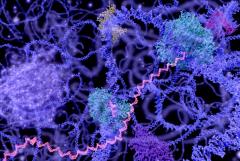
A team co-led by researchers at Weill Cornell Medicine and the New York Genome Center has developed an advanced method for revealing how gene mutations disrupt the normal packaging of DNA. These structural changes, which alter patterns of gene activity in a cell, are known as epigenetic changes and can lead to malignancy.The new method, described in a paper published on May 8 in Nature, offers biologists a powerful tool that can be applied in many fields of investigation, from basic...
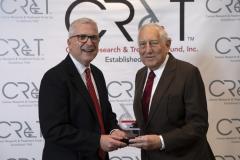
Dr. John Leonard, the Richard T. Silver Distinguished Professor of Hematology and Medical Oncology and interim Chair of the Weill Department of Medicine, was presented with the Lifetime Achievement Award from the Cancer Research & Treatment Fund, Inc. (CR&T) during its 2023 Cancer Survivors Hall of Fame Dinner on Nov. 16. The annual event honors survivors, humanitarians, and medical professionals committed to supporting life-saving research to better treat, prevent and cure cancer,...