The seed grants are an outgrowth of the Department of Medicine's Strategic Plan, intended to catalyze and encourage the pilot-testing of bold, creative and "high impact but high risk" research projects that involve new directions and new interdisciplinary collaboration by the Principal Investigator. The goal is to support the growth of high-impact research in the Department of Medicine that will result in major new support from the NIH.
WCMC investigators, collaborating with national and international scientists, have achieved a milestone in the field of kidney transplantation. For the first time, a human kidney allograft (and/or involving a kidney from a human) has been sequenced for the expression pattern of small RNAs. This original research by Dr. Manikkam Suthanthiran and colleagues has resulted in a landmark paper in Transplantation.
Dr. Ari Melnick led a team of national and international scientists in a first of its kind study in which they decoded the key "software" instructions that drive three of the most virulent forms of acute lymphoblastic leukemia (ALL). Specifically, they uncovered that ALL's "software" is encoded with epigenetic marks, chemical modifications of DNA and surrounding proteins, allowing the research team to identify new potential biomarkers and therapeutic targets.
Dr. Kyu Y. Rhee, Associate Professor of Medicine, Division of Infectious Diseases, and a team of physician-scientists applied the technology of mass spectrometry to study the process by which existing antibiotics attack tuberculosis once inside bacterial cells.
John P. Leonard, M.D., the Richard T. Silver Distinguished Professor of Hematology and Medical Oncology, has been appointed Vice Chair for Clinical Research in the Department of Medicine and that David J. Christini, Ph.D., Professor of Medicine (in Cardiology) has been appointed Vice Chair for Basic Research in the Department.
Dr. Leandro Cerchietti has received a Doris Duke Clinical Scientist Development Award (one of only 12 such awards given yearly by the Doris Duke Foundation). Funding is $150,000 per year spanning 3 years; his project centers on the role of metabolism in determining the clinical behavior of tumors, using metabolomic profiling for the study of B-cell lymphoma.
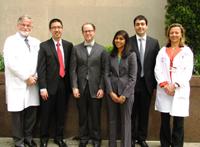
Established in 1995, the David E. Rogers Memorial Research Award encourages medical residents to continue their investigative research in internal medicine. Each year, senior medical residents submit research abstracts, and four finalists are chosen to present their work during medical grand rounds. Finalists listed below.
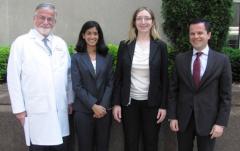
The Fellows Research Award is presented annually to fellows within the Department of Medicine who have presented outstanding research. This year's winners were announced at the May 29th Medicine Grand Rounds and marked the 10-year anniversary for the award.
The 2012 Department of Medicine Investigator Award finalists were announced and their talks were delivered during Grand Rounds on May 22, 2012. This was the 21st annual presentation of the DOM Investigator Award, which is presented to members of the Department of Medicine, below the rank of professor, who perform on an outstanding level in the areas of clinical and/or basic biomedical research. The award is generously supported by the Michael Wolk Foundation.
In a randomized, controlled study of 756 patients, Dr. Mary Charlson created and utilized a script to provide patients with a tool to "fulfill their promise to themselves that they will do what's needed for their health." The results have been published in the Archives of Internal Medicine.