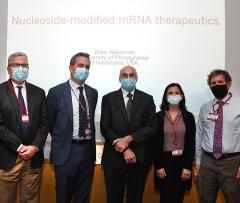
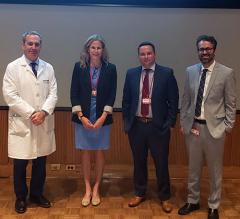
Lectures were provided by WDOM faculty and keynote speaker, Dr. Drew Weissman, who played a major role in critical discoveries that allowed for the mRNA platform to be used in developing vaccines against SARS-CoV.
The researchers found that SARS-CoV-2 triggers an inflammatory antiviral response in the adipose tissue (body fat) and causes its dysfunction.
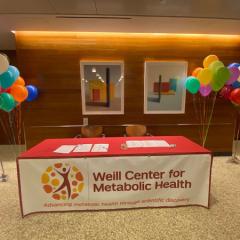
The new Center is well-positioned to become a world-renowned leader for scientific discovery in translational and molecular discovery related to the pathogenesis and treatment of metabolic disease.
With more than 200 pulmonary disorders that fall under the umbrella of ILD, patient evaluation, proper diagnosis, and determining the best treatment is of the utmost importance.
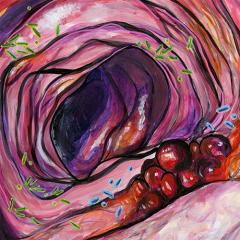
Drs. Gregory Sonnenberg, Jeremy Goc, and Manish Shah have discovered that innate lymphoid cells protect against colorectal cancer, in part, by helping to maintain a healthy dialogue between the immune system and gut microbes.
The HOPE (HIV Obstruction by Programmed Epigenetics) Collaboratory represents a completely new strategy for curing HIV. Utilizing previous knowledge regarding how other viruses have become naturally inactivated over time, the HOPE approach aims to silence and permanently remove HIV from the body.
Dr. Goncalves and colleagues have published a paper in Nature demonstrating that a high-fructose diet promotes the elongation of intestinal villi.
As part of The Martin Delaney Collaboratories, which is an NIH flagship funding mechanism, Dr. Jones will be leading REACH (Research Enterprise to Advance a Cure for HIV) in pursuit of a cure for HIV.
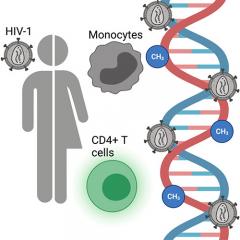
The research from Drs. Ndhlovu and Corley finds that abrupt and altered cell-type specific DNA methylation profiles in blood, seen during acute HIV infection, persist despite prompt initiation of antiretroviral therapy.
This award is presented annually to members of the Weill Department of Medicine below the rank of professor who perform on outstanding levels in the areas of clinical and/or basic biomedical research.